Composite Chart Calculator: What Is Our Relationship Chart?
A composite chart calculator turns two birth dates into one chart for the relationship itself. Enter both dates and you get the midpoint of each pair of planets with its sign, its degree and a short line, followed by every aspect between the two charts. Birth time and city are optional. Add both times to also see a rising sign and Midheaven.
A composite chart calculator finds the short-arc midpoint of each pair of planets from two people and shows the results as a single chart. Two birth dates are enough to start. Add both birth times and the chart also gets a rising sign and Midheaven.
How to use it
- Enter both birth dates Type the month, day and year for each person. Once a box is filled, your cursor jumps ahead to the following one. No name or gender is asked for.
- Add time and city if you know them Fill in hour, minute and AM or PM, then pick the city from the list. When you don't know a birth time, check the option next to it and the time and city inputs will vanish.
- Press the button The results page opens with the composite chart, every aspect between the two charts, the scores and the chart wheel. Pick Couple or Friends or family from the options above.
- Read the composite chart first Scan the midpoints by sign and degree, then check the strongest connections. Use the Easy, Tense and Strong either way groups to see where the pair’s pattern gathers.
Who reaches for a composite chart
People usually look for a composite chart after they have already compared two birth charts and want something different: a chart for the pairing itself. A few common starting points:
- Two people early in a relationship who want a shared picture rather than a list of who affects whom.
- Partners who have been together for years and are curious what pattern their combined chart shows.
- Friends, siblings, a parent and an adult child, or business partners who want to look at the bond between them.
- Astrology readers who prepare charts for others and want the composite next to the aspect list.
The composite chart suits reflection. Treat the midpoints as prompts for conversation, not as rulings on the relationship.
Getting the birth details ready
The birth date is the one thing you need. Check the year in particular, since a mistyped year shifts the slower planets and changes several midpoints.
Birth times are worth a few minutes of searching. A birth certificate often carries one. Parents and relatives often remember the hour, and baby books or hospital papers sometimes note it. Write down the time as AM or PM exactly as recorded, because a mix-up between the two moves the chart by twelve hours.
The rising sign and Midheaven of the composite chart come from both birth times together, so gather the time for each person before you press the button if you want those two points.
For the city, type the place of birth and choose the matching line from the list. The list shows city, region and country, which helps when several towns share a name. Pick the town where the birth took place, not where the person grew up.
Dates worth double-checking
People born close to midnight are the ones most likely to have a date that differs between a certificate and family memory. If a parent says “just after midnight,” read the document itself. People born abroad may also have a certificate that lists the date in day-month-year order, so confirm which number is the month before typing it into the month box.
Deciding between Couple and Friends or family
The switch at the top of the results changes how the pairing is read. Couple suits partners. Friends or family fits siblings, parents, cousins, close friends and colleagues. Try both if the relationship does not fit one label neatly, such as a long friendship that became a partnership, and see which wording matches the pair.
Reading the results in a useful order
Start with the counts
The three counts at the top, Easy, Tense and Strong either way, give the overall shape. A result with many Easy connections reads differently from one with a long Tense list, and neither is a grade. Many Tense connections can describe two people who push each other, while many Easy ones can describe a pair that rarely has to work at understanding. Look at your own situation and ask which description sounds familiar.
Move to the strongest connections
The strongest connections are listed with a one-line reading. Read those before the full table. Aspects with a smaller orb sit closer to exact, so they stand out more than ones near the edge of the allowed range. Pick two or three that catch your eye, write them down and see how they relate to what actually happens between the two of you.
Then the composite chart
Every midpoint is shown with a sign, a degree and a short line. Go through them one at a time rather than all at once. Compare a line with a recent week: did the pair behave the way it describes? Notice which lines fit and which do not. The ones that fit are the ones worth discussing.
Check the four scores
You receive a separate score out of 100 for each of four areas: attraction, talking, feeling and staying. Read them side by side. A pair with a high talking score and a lower feeling score, for example, may find conversation easy and want more deliberate time for emotional topics. The scores point to where a pair might put attention, and they do not rank relationships.
Finish with the wheel and house overlays
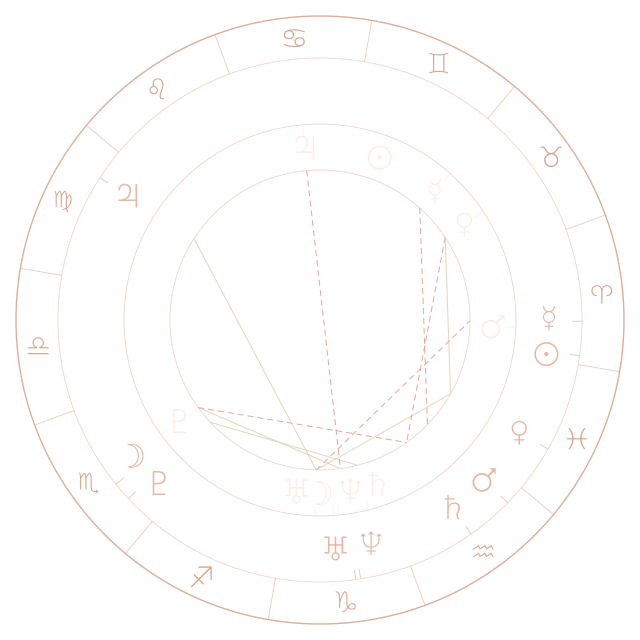
The two-ring wheel shows both charts together, which helps when a line in the aspect list is hard to picture. House overlays show where one person’s planets fall in the other’s houses, so they add a sense of which areas of daily life each person touches in the other.

Using the result in a real conversation
You will get the most from a chart when you go over it with someone else. A few ways to put it to use:
- Each person reads the Easy list alone, then trades notes on which lines feel true.
- Pick one Tense connection and talk about the last time it showed up in daily life, such as how you decide on money, plans or time apart.
- Use a Strong either way connection as a topic: where do the two of you feel most alike, and when does that closeness feel like too much?
- Read the staying score together and ask what each person does that keeps the bond steady.
Scenes where the chart earns its place
Before a move or a big plan
Two partners deciding whether to live together can read the composite lines one evening and note which ones describe their current habits. The chart gives them words for things they may already sense, such as one person needing more quiet than the other.
Between siblings or a parent and grown child
Family pairs often have a long history and few neutral ways to talk about it. Choosing Friends or family and reading the Tense list together can open a conversation about an old pattern without pointing at one person.
Working partners
Two people starting a project can look at the talking score and the Strong either way connections for a sense of how they might split roles. Treat the result as a starting question for the first planning meeting.
Practicing with your own charts
Run a pair twice: once with only dates and once with times and cities, then compare which midpoints stay in place and which shift. Slow-moving planets rarely change, while the Moon, the rising sign and the houses depend on the time. Switching from Placidus to Whole Sign on the results page shows another way to read the houses, and some readers prefer one over the other. Try your own chart with a parent, a close friend and a partner, and notice how the same person looks different across three pairings.
Common questions
Is this composite chart calculator free?
Yes. Every calculation costs you nothing, as does the one-line reading that comes with each aspect, and you won't have to sign up for an account or hand over an email address. Signing in is only needed if you want to save one reading to your account.
How is a composite chart calculated?
A composite chart takes the short-arc midpoint of each pair of planets, one from each person. The midpoint is shown with its sign and degree and a short line. The result describes the two of you as one pairing, not as two separate people.
Do you need a birth time for a composite chart?
No, two birth dates are enough to get a composite chart. Adding both birth times brings in the composite rising sign and Midheaven, and each person’s house overlays. If a time is unknown, tick the box beside the time fields and the chart still opens with the dates alone.
How is a composite chart different from synastry?
Synastry compares one person’s chart with the other’s and lists the aspects between them. A composite chart merges the two into a single chart. The results page shows both: every aspect with its orb, plus the composite chart.
Is a composite chart the same as a Davison chart?
No. A composite chart uses the midpoint of each pair of planets, while a Davison chart is built from a midpoint in time between two births. This page gives the planet-pair midpoint version, shown with sign and degree for each pair.
Is this a compatibility calculator?
Not exactly. The tool creates a relationship chart with a list of aspects, and you also get 100-point scores covering attraction, talking, feeling and staying. The scores are a way to see where the connection is strongest, not a verdict on the pair.
Are Tense aspects bad in a composite chart?
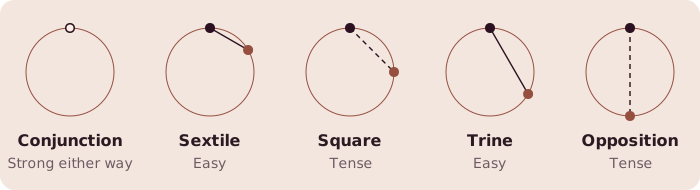
No. Tense is the name for squares and oppositions, which show friction or effort between two parts of a chart. Easy aspects are trines and sextiles. Conjunctions are marked Strong either way. Each group simply describes a different kind of connection.
Do I need an account to use it?
No. Nothing requires an account or email. Your browser does the math itself, and the web address never contains any birth dates. After signing in, you can store one reading in your account and delete it whenever you like from the results page.
Can I use it for friends or family?
Yes. The results can be switched between Couple and Friends or family. Should one of the two people be younger than 18, you can only select Friends or family.
Which zodiac and house system does it use?
It uses the Western tropical zodiac. The house system starts out as Placidus, while you can switch to Whole Sign on the results page. Time zone and daylight saving are set from the place and date, so you do not choose them.