What are the synastry aspects between two birth charts?
The synastry aspects between two people are the angles that planets in one chart make to planets in the other. Put in two birth dates and you will see all of the aspects. They are grouped under Easy, Tense and Strong either way, and each carries its orb plus a plain one-line note. Birth time and city are optional, so a date is enough to start.
Synastry aspects are the trines, sextiles, squares, oppositions and conjunctions that form between the planets of two charts. Easy ones flow, Tense ones create friction, and conjunctions blend two planets into one strong link. Two birth dates give you the full list, with the orb of each.
How to use it
- Fill in the first person Type the month, day and year of birth. Once a box is filled, the cursor jumps ahead to the next one. If you have a birth time and city, include them.
- Fill in the second person Repeat for the other person. If a birth time is unknown to you, tick its checkbox and both the time field and the city field disappear. No name is needed.
- Press the button and read the counts Press the button to see the result. Choose Couple or Friends or family, then look at the counts of Easy, Tense and Strong either way connections before reading the single lines.
- Read the aspects one by one Start with the strongest connections, then go through the full list. Each aspect shows its orb and a one-line reading, so you can see which links are tight and which are loose.
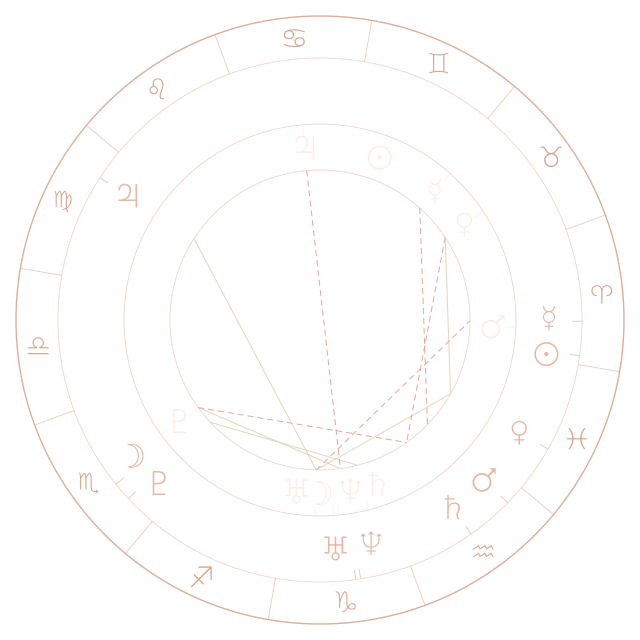
Who looks up synastry aspects, and why
Most visitors arrive with one specific pair in mind. You might be several weeks into a new romance and curious about what the charts reveal regarding the attraction you two feel. Two close friends, after years of easy conversation and one recurring argument, wonder whether the chart shows both. A parent and an adult child sometimes compare charts out of plain curiosity about why some topics go smoothly and others never do.
The list of aspects suits each of these, because it shows individual links rather than one overall label. You can look at a single connection, think about whether it matches what you have noticed, and move on. The list works well as a prompt for reflection and conversation.
Getting the two birth dates ready
A little preparation makes the comparison cleaner. Check the date itself first. A birthday near midnight or near the end of a month is where typing mistakes happen, so read the numbers back before you press the button.
If you know a birth time, find the source. A birth certificate or a hospital record is more dependable than a family memory of “around lunchtime”. When the time is uncertain, leaving it out is better than guessing, because a wrong time shifts things you cannot see.
If you do have a time, pick the birth city from the list that appears as you type. The list shows city, region and country, so a small town with a common name is easy to tell apart from others.
When you are entering a friend’s or a date’s details, it is polite to ask first. Many people enjoy sharing a birth date and are happy to look at the result together.
Reading the three groups first
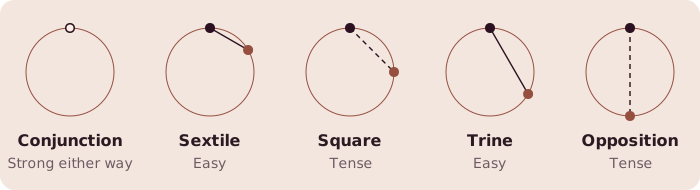
Before reading any single line, look at the counts of Easy, Tense and Strong either way connections. The balance gives you the general texture of the comparison.
A lot of Easy aspects
Trines and sextiles are the Easy group. Plenty of them suggests two charts that cooperate without much effort. The caution that comes with trines is that ease can be taken for granted, so a gift may sit unused. If your result leans this way, ask what you two could do on purpose with the things that already come naturally.
A lot of Tense aspects
Squares and oppositions make up the Tense group. A high count does not mean a poor match. It points to friction and pull, which many astrologers link with growth and decisions. A pair with many Tense aspects may simply be a pair that has more to talk through. Read the lines one by one to see which areas the friction touches.
Strong either way
Conjunctions land here because their feel depends on which planets are involved. Two energies arrive together and strongly. They can be comfortable or demanding, so ask which way it goes for you two.
Reading each aspect type in context
Conjunction
Two planets sit at almost the same spot, so their themes blend into one. You tend to feel both at once. Because conjunctions are among the most noticeable links in a chart, they are often the ones people recognize first.
Sextile
Think of an open door. The two themes get along and offer chances, but nothing happens unless someone walks through. If a sextile shows up in your list, ask what the opportunity might look like in daily life and whether either of you has acted on it.
Trine
A trine is an easy, flowing link that often shows natural talent. Since it asks for little effort, it is easy to overlook. Notice which trines you recognize, then notice which ones you have never used.
Square
A square is two planets pulling in different directions. The discomfort is real, and so is its usefulness: squares tend to push people toward decisions and action. When you read a square, ask what each person wants and where those wants cross.
Opposition
An opposition is a seesaw. One of you may swing between two needs, or one side may show up mainly in the other person. The work is balance, honoring both ends rather than choosing only one.

Using the orb to decide what to read first
Every aspect comes with an orb, which tells you how far the link is from exact. A small orb means the aspect is tight and tends to be felt more clearly. A wide orb means it is looser and easier to overlook. When the list feels long, read the tight ones first and treat the wide ones as background.
A simple way to work through the list
Set aside a quiet half hour and read the result with a notebook or a notes app. Go in this order:
- Read the strongest connections and write down the ones that make you nod.
- Pick one Easy aspect and one Tense aspect and write a real example of each from your own history together.
- Look at the one-line readings you disagree with. Disagreement is useful, because it shows which parts of the comparison do not match your experience.
- Choose one Tense aspect to talk about with the other person, in a calm moment and not in the middle of a disagreement.
Sharing the result with the other person
Showing someone a list of Tense aspects can feel awkward, so start with the Easy ones. A short opening such as “We have a few easy links here, which of these do you recognize?” keeps the talk friendly. Then move to the Tense group and treat it as a list of topics, not of faults.
For a sibling, a close friend or a parent, switch the result to Friends or family. When one of you is younger than 18, you can only use that version.
When you want a second look
Once the list is clear, the composite chart on the result page shows the relationship itself as one chart, which is a natural next step after reading the separate links. If you also want a score-based overview, the site’s birth chart compatibility and love compatibility pages offer a different way into the same two dates.
Common questions
Is there a free synastry aspects calculator that lists every aspect?
Yes. This calculator is free, needs no account or email, and lists every aspect between the two charts. The list is split into Easy, Tense and Strong either way, and every aspect shows its orb with a one-line reading.
Can I calculate synastry aspects if I don’t know one birth time?
Yes. Tick the box for an unknown birth time and the time and city boxes are hidden. Two birth dates alone give you the result, and the aspects are grouped under Easy, Tense and Strong either way.
What is the strongest synastry aspect?
A conjunction is among the most noticeable links, because two planets sit at nearly the same spot and blend together. A tight orb makes any aspect stronger. The result lists the strongest connections first, so you can see which ones stand out.
What are the worst aspects in synastry?
No aspect is simply the worst. Squares and oppositions bring friction and pull, which can be uncomfortable but also pushes people to act and balance. The Tense group shows where that effort is likely to be needed.
Do squares and oppositions ruin a chart comparison?
No. Squares and oppositions show friction, not a verdict. Many astrologers see squares as places of growth, and oppositions ask for balance between two needs. A comparison with some Tense aspects is common and says nothing final about people.
What is the difference between synastry and a composite chart?
Synastry compares two separate charts and lists the aspects between them. With a composite chart, you merge both charts into a single one that represents the relationship as its own entity. The result page shows both, so you can read the aspects and the combined chart together.
Are my birth details kept?
Your browser does the calculating, and your birth details are kept in your browser. If you buy a report or save to your account, they are kept on our servers, and you can delete a saved reading from the results page. The page address never contains your birth dates.