How do I see 7th house synastry for me and another person?
To see 7th house synastry for you and another person, enter both birth dates, then add the birth time and city of the person whose houses you want to read. The result shows which planets of the other person land in that 7th house, the part of the chart about one-to-one partnership. It also lists every aspect between the two charts as Easy, Tense or Strong either way, with a one-line reading for each and scores for attraction, talking, feeling and staying.
7th house synastry checks where one person’s planets fall in the other person’s seventh house, which covers close partnerships, business partners and formal agreements. Placing a planet there points to a subject, not an outcome. Houses depend on birth time and place, so those two details matter most.
How to use it
- Type both birth dates Fill in month, day and year for each person. The cursor moves to the next box when one is full. No name or gender is asked.
- Add birth time and city For the person whose houses you want, enter hour, minute and AM or PM, then type the city and pick it from the list. Time zone is handled for you.
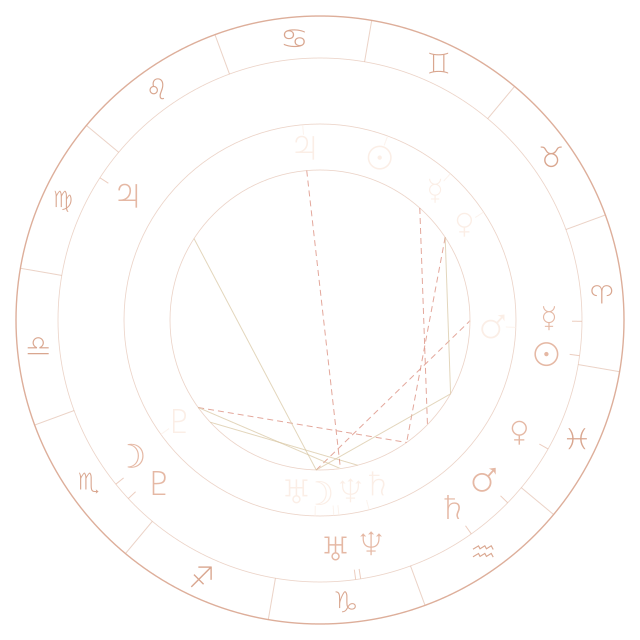
- Press the button The results page opens with whose planets land in whose 7th house. Next come the strongest connections, the scores, the two-ring chart wheel, every aspect with its orb, the house overlays and the composite chart.
- Read the overlays, then the aspects Find the planets sitting in the 7th house first. Then check the aspect list for the same planets, and switch between Couple and Friends or family if you like.
Who looks up 7th house synastry, and why
Most people arrive with one pairing in mind. Someone has started dating and wants to know which of their partner’s planets fall in the area of partnership. Someone else is about to sign a business agreement and is curious how the seventh house, which covers formal agreements and negotiation, looks between two founders. A third person is simply comparing notes with a close friend.
All three questions share a shape: two people, one house, and a handful of planets. Keeping that shape in mind helps when the results page shows a lot at once.
Gather the details before you open the form
Houses are built from birth time and place, so the 7th house of a person is only as reliable as the time written down for that person. A birth certificate or a hospital record usually gives the minute. A family memory like “around lunchtime” gives a much shakier house.
A few habits make the form quicker:
- Write both birth dates in month, day, year order before you start, so no box gets a day where a month belongs.
- Look up the birth city, not the town where the family lives now. The list shows city, region and country, which helps with places that share a name.
- Confirm AM or PM with the person. A wrong AM or PM shifts every house.
- If you want to read the houses of both people, have both birth times ready, not only your own.
Asking a parent or a relative for the birth record a few days ahead is often the slowest part, so start there.
Read the 7th house through the planet, not the house alone
A planet in the seventh house tells you which topic of one person lands in the other person’s area of partnership. The planet decides the flavor. Short notes on each:
- Sun in the other person’s 7th house: your sense of self and vitality is what they notice in a close bond.
- Moon:: your moods and need for safety show up in the one-to-one space.
- Mercury:: talking and thinking take center stage. Conversation is the main way the two of you meet.
- Venus:: your sense of beauty and your pull toward certain people come into play. Attraction and appreciation become a theme.
- Mars:: drive and assertion enter the partnership. Negotiation and open rivalry are both part of the seventh house, so Mars is worth a second look.
- Jupiter:: growth and generosity are placed in the area of partnership.
- Saturn:: responsibility, patience and limits are placed there.
None of these is a verdict. Each is a subject for the two people to talk about.
Separate the overlay from the aspects
An overlay and an aspect answer different questions. The overlay says where a planet lands. The aspect says how two planets relate by angle. A Venus in the other person’s 7th house is one fact. A Venus trine Mars between the same two charts is another, and the results page lists it with its orb.
A useful order for reading:
- Note every planet that falls in the 7th house.
- For each, search the aspect list for the same planet.
- Check the orb. A tighter angle stands out more than one near the edge of the allowed range.
- Read the one-line reading next to each aspect before forming a view.
When an overlay and a tight aspect point at the same planet, the theme is worth more attention than a lone overlay.

Compare both directions
House overlays do not have to be one-sided. Your planets may fall in the other person’s 7th house, and theirs may fall in yours. Two people can describe the same pairing very differently, because each lives on a different side of it. When you have both birth times, look at the overlays from each side and ask each person what they notice, not only what the chart says.
Use the scores as a guide to where to start
The scores for attraction, talking, feeling and staying give a quick sense of where the charts lean. Use them to decide which part of the aspect list to read first. If talking scores high, look for Mercury connections. If staying scores lower, look at which Tense aspects are close in orb, then read their one-line readings.
A scene: two people about to work together
Say two colleagues are planning to start a studio. One has Mars in the other’s 7th house, and Mercury of the second person trines the first person’s Sun. Mars points to drive and assertion entering the partnership, including negotiation. The Mercury trine points to easy talking. Together they suggest a pairing where discussion comes readily and where deciding who leads each task is worth settling early. Written agreements are a seventh house subject, so this is a good moment to put roles on paper.
Questions to bring to the conversation
Chart results are most useful when they open a conversation. A few that fit the 7th house:
- What do you look for in a close partner, and what have you learned from the people you have been closest to?
- How do the two of you handle disagreement or negotiation?
- What does each of you need in order to feel safe, and where does patience come in?
- Where does one of you want formal commitments, such as shared plans or agreements, and where does the other prefer to keep things open?
These questions suit a couple, a pair of friends, a parent and an adult child, or two people about to work together.
Keep the composite chart for the bigger picture
Synastry compares two separate charts. The composite chart on the results page treats the pairing as one chart of its own. Read the overlays first to see how each person meets the other, then open the composite chart to see the bond as a single unit. Mixing the two in one sentence tends to blur which is which.
The Descendant and the start of the house
The 7th house begins at the Descendant, the point directly opposite the rising sign. It needs a birth time and city, because the Descendant moves around the wheel quickly.
Tense aspects around the 7th house
A planet in the 7th house that also forms a square or opposition to a planet in the other chart is a place where friction and attention meet. That is not a warning. Friction in the area of partnership often shows what each person wants from the other and what they have not yet said aloud.
The 7th house as a mirror
Because the 7th house is opposite the rising sign, it shows what you look for and learn from in other people. When a planet of the other person lands there, ask what that person brings out in you.
Come back with a clearer question
A first reading often raises a better question than the one you started with. Perhaps Saturn lands in the 7th house and you want to see how patience and limits show up. Perhaps Venus lands there and you want to compare its aspects. Write down the planets and aspects that stood out, and return to them after a few conversations. The chart stays the same, while your sense of what matters in it usually changes.
Common questions
Is there a free way to see which of their planets fall in my 7th house?
Yes. Enter both birth dates plus the birth time and city of the person whose houses you want to read, and the results page shows the house overlays. The calculation and the one-line reading of each aspect are free, with no account and no email.
What does 7th house synastry mean?
7th house synastry means one person’s planets sit in the other person’s seventh house. That house is about one-to-one partnerships: close relationships, business partners and formal agreements. It begins at the Descendant, so it shows what you look for and learn from in other people.
Does a planet in my 7th house mean marriage?
No. A planet in the 7th house points to a subject, which is partnership, and says nothing certain about marriage or any other outcome. Treat an overlay as a theme worth talking about, and read it together with the aspects between the two charts.
What does it mean when Venus is in your partner’s 7th house in synastry?
Venus is what a person finds beautiful and who they are drawn to, and the 7th house is about close partnership. Together they point to attraction and appreciation as a theme in the pairing. The aspect list shows whether Venus also connects with other planets.
What is the strongest synastry aspect?
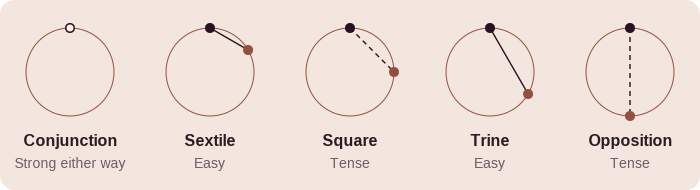
The results page ranks the strongest connections for the two charts you enter. Conjunctions are labeled Strong either way, while trines and sextiles are Easy and squares and oppositions are Tense. A smaller orb, meaning a tighter angle, generally makes a connection stand out more.
Do I need a birth time to see 7th house synastry?
Yes, add the birth time and city of the person whose houses you want to read. Enter hour, minute and AM or PM, then pick the city from the list. Time zone and daylight saving come from the place and date, so nobody has to look them up.
Which planets can show up in the 7th house?
Any planet can. The Sun stands for sense of self and vitality, the Moon for moods and the need for safety, Mercury for talking and thinking, Venus for attraction, Mars for drive, Jupiter for growth and generosity, and Saturn for responsibility, patience and limits.
Can I use it for a friend or family member?
Yes. The results can be switched between Couple and Friends or family. The seventh house covers close one-to-one bonds, so overlays can be read for friends, relatives and business partners as well as romantic pairs.
What is the Descendant?
The Descendant is the point directly opposite the rising sign, and it marks the start of the 7th house. It is worked out from the birth time and city, so it shifts quickly if the time is wrong.
Is a hard aspect to a 7th house planet bad?
No. A square or opposition in the area of partnership shows friction and attention in the same place. It often points to a topic the pair needs to talk about, not to a poor match.
What does Saturn in my partner’s 7th house mean?
Saturn stands for responsibility, patience and limits. In your partner’s 7th house it points to those subjects in the area of one-to-one partnership. It is a subject to talk about, not an outcome.